 English
 French
 German
 Italian
 Polish
 Russian
 Spanish
Quick answer: “Vape pods” can refer to prefilled replacement cartridges, refillable pods, or the pod component used in a closed or open pod system. For European wholesalers, distributors and importers, the right sourcing decision depends on device compatibility, nicotine and e-liquid specifications, product notification, packaging, and each destination market’s rules.
This guide explains how B2B buyers can compare pod formats, evaluate suppliers and prepare a market-specific purchasing checklist. Requirements differ across countries, so do not treat a supplier’s general compliance statement as proof that every SKU can be sold throughout Europe.
What Are Vape Pods?
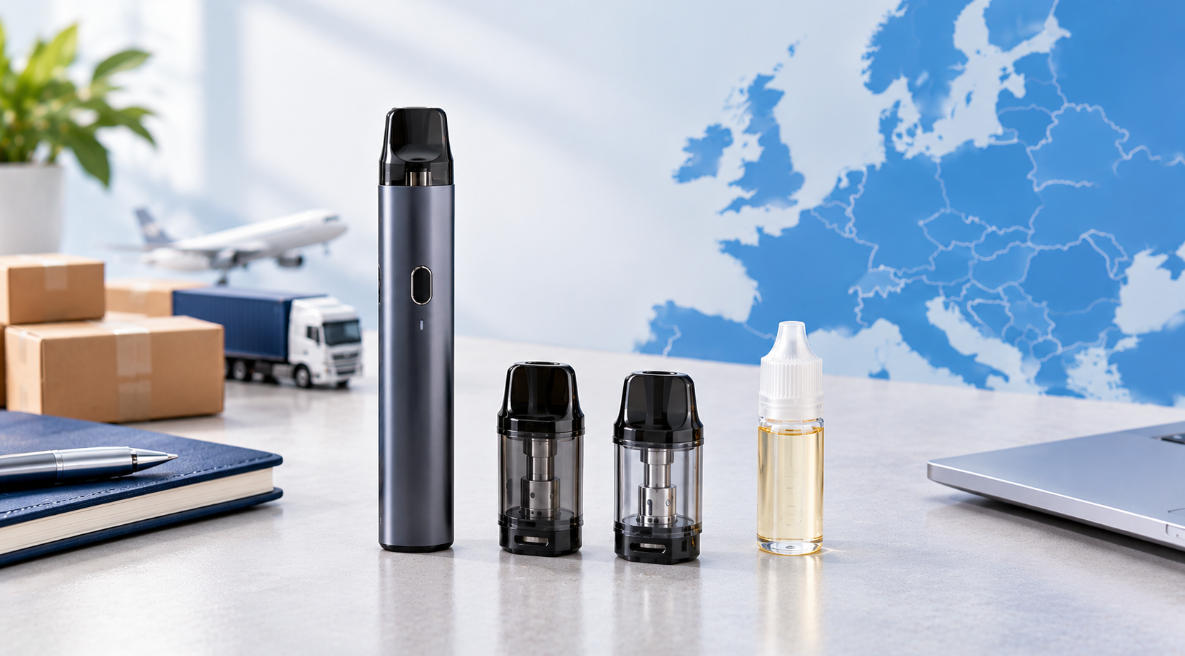
A vape pod is a cartridge or reservoir designed to hold e-liquid and connect to a compatible vaping device. Depending on the product, it may arrive prefilled and be replaced when empty, or be designed for the user to refill. Some pods include an integrated coil; others work with a separate replaceable coil. These formats are not interchangeable by default.
Common pod formats
- Prefilled replacement pods: Contain e-liquid before sale and are replaced as a unit. Buyers should verify device compatibility, nicotine details where applicable, packaging and the legal status of the exact SKU.
- Refillable pods: Allow the user to add compatible e-liquid. Check fill-port design, leak performance, capacity, cleaning instructions and compatible liquid specifications.
- Pods with integrated coils: Combine the liquid reservoir and heating element in one replaceable component.
- Pods with replaceable coils: Allow the coil to be changed separately, but require clear compatibility information and availability of replacement parts.
How B2B Buyers Should Compare Vape Pods
| Factor | What to verify | Why it matters |
|---|---|---|
| Device compatibility | Exact compatible device models, contacts, fit and firmware or power requirements where relevant | Reduces returns and prevents buyers from assuming pods are universal |
| Pod construction | Materials, seals, fill port, coil type and batch consistency | Supports quality assessment and troubleshooting |
| E-liquid details | Ingredients, nicotine strength where relevant, capacity and traceability | Helps confirm product-specific and market-specific requirements |
| Packaging | Warnings, instructions, ingredient information, language and tamper evidence where applicable | Packaging requirements can vary by jurisdiction and product category |
| Supply continuity | Replacement pod availability, lead times, MOQ, batch coding and change-control process | Helps plan repeat orders and avoid obsolete device-pod combinations |
European Compliance: Check the Exact Product and Country
EU rules and EU-CEG notification
Article 20 of Directive 2014/40/EU sets requirements for electronic cigarettes and refill containers sold as consumer products in the EU. Depending on the product, these include nicotine concentration and container-volume limits, child-resistant and tamper-evident features, refill mechanisms, ingredient and nicotine information, health warnings and notification obligations. Manufacturers and importers must submit relevant product information to the competent authorities of the Member States where they intend to place products on the market; EU-CEG is the Commission’s common reporting and notification tool.
Do not assume that every pod has the same regulatory classification or that a notification in one context establishes eligibility in every country. Confirm the exact model, product configuration, responsible economic operator, notification evidence, labels and local requirements before placing an order.
National rules and market access
EU-level rules coexist with national measures. Countries may have additional restrictions affecting product categories, flavours, packaging, taxes, sales channels or advertising. The UK is outside the EU and has its own rules, including its single-use vape restrictions. Prepare a separate checklist for every intended destination rather than using “Europe compliant” as a substitute for evidence.
Supplier Due-Diligence Checklist for Wholesalers and Importers
- SKU-level documents: Request current technical specifications, product identifiers, ingredient and nicotine information where relevant, user instructions, packaging artwork and applicable test reports.
- Notification responsibility: Confirm which legal entity is responsible for the required notification and request evidence tied to the exact product and destination market.
- Quality controls: Ask how the supplier checks pod fit, leakage, coil performance, electrical contacts, batch consistency and incoming materials. Review records rather than relying only on marketing claims.
- Traceability: Confirm batch or lot identification, complaint handling, corrective actions, product-change notifications and recall cooperation.
- Compatibility matrix: Request a written list of supported device and pod combinations, including any exclusions.
- Environmental obligations: Check applicable battery, waste electrical and electronic equipment, packaging and producer-responsibility duties based on your role in each market.
- Commercial terms: Agree on sample approval, MOQ, lead times, quality acceptance criteria, warranty, delivery terms and how discontinued components will be handled.
Questions to Ask a Vape Pod Manufacturer
- Is the pod prefilled or refillable, and is its coil integrated or replaceable?
- Which exact device models are compatible, and how is compatibility validated?
- Can you provide current documentation for the specific SKU and intended destination country?
- Who manages product notifications, translations and packaging updates?
- How are leakage complaints, defective batches and product changes investigated?
- What are the MOQ, lead time, replacement-part availability and process for repeat orders?
How to Plan a Vape Pod Range
Build a SKU-by-country matrix before approving inventory. Record the pod format, compatible device, refill or replacement method, e-liquid details, notification evidence, packaging version, responsible operator, applicable environmental duties and the date each document was reviewed. Keep open-pod and closed-pod formats distinct in the catalogue so customers do not mistake one for another.
For product pages and trade catalogues, state compatibility plainly and avoid unsupported claims such as “universal fit,” “fully compliant across Europe” or “leak-proof.” Use only product specifications and test claims that can be substantiated for the exact model.
Frequently Asked Questions
Are vape pods universal?
No. Pods are typically designed for specific device families. Verify the exact compatible model and version before ordering or listing a replacement pod.
What is the difference between prefilled and refillable vape pods?
Prefilled pods contain e-liquid before sale and are generally replaced when empty. Refillable pods are designed to be filled with compatible e-liquid. Their construction, maintenance and applicable product requirements may differ.
What EU rules apply to nicotine-containing vape pods?
Depending on how the product is classified, Article 20 of Directive 2014/40/EU may apply to e-cigarettes and refill containers, including requirements for nicotine and container limits, packaging, warnings and notification. Confirm the exact product and current national implementation.
Do importers need EU-CEG documentation?
Manufacturers and importers have notification responsibilities for relevant products under the Tobacco Products Directive. Confirm who is responsible for the specific SKU and obtain evidence of the required notification for each intended market.
What should a wholesaler check before buying replacement pods in bulk?
Check compatibility, product identifiers, quality and leakage records, documentation, packaging, batch traceability, replacement availability, MOQ and delivery terms. Validate legal requirements for each destination country.
Can one pod product be sold in every European country?
Do not assume so. EU rules provide a common framework, but national measures and product-specific requirements can differ. Maintain a country-by-country review and seek qualified advice where classification is uncertain.
Conclusion: Buy by Compatibility and Evidence
For European wholesalers, distributors and importers, a strong vape pod sourcing process starts with exact compatibility and continues through supplier documentation, quality controls and market-specific checks. A clear SKU matrix helps reduce avoidable product mismatches, returns and market-access surprises.
B2B enquiries: Contact ROCKMEVAPE to discuss product specifications and sourcing documentation. Confirm eligibility for the exact product and destination market before sale.
Official Sources
- European Commission — Electronic cigarettes
- European Commission — EU-CEG FAQ
- EUR-Lex — Directive 2014/40/EU
For related reading, see our guide to disposable vapes vs. pod systems and our European rechargeable vape pen buyer guide.