 English
 French
 German
 Italian
 Polish
 Russian
 Spanish
Quick answer: “Rechargeable disposable vape” is a marketing term, not a reliable legal product classification. A rechargeable battery does not automatically make a vape reusable. For European wholesalers, distributors and importers, the key questions are whether the liquid container can be refilled or replaced, whether user-replaceable coils are required and available, and what the destination country’s current rules say.
This guide explains how B2B buyers can assess product design, supplier documentation and market eligibility before sourcing. It does not certify any specific device as compliant or legally saleable.
What Is a Rechargeable Disposable Vape?
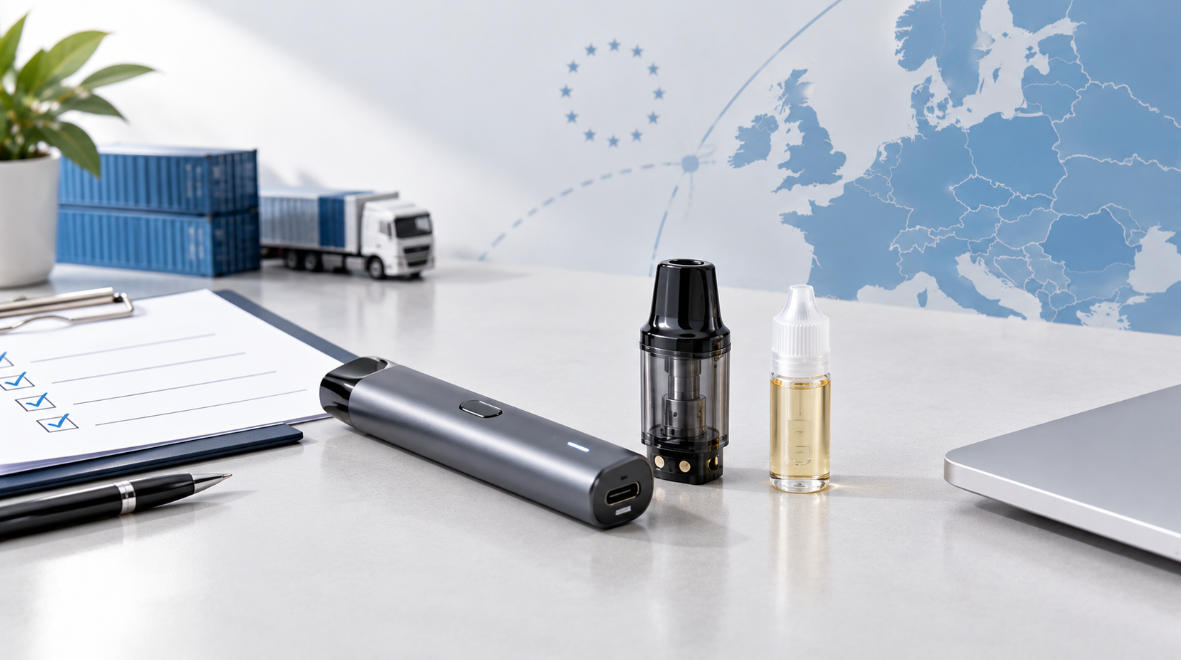
The phrase usually describes a vape device with a rechargeable battery that is marketed as disposable or limited-use. Product designs vary widely: a device may have a sealed, non-refillable liquid reservoir, a replaceable pod, or a refillable tank. These differences matter more than the product label when assessing technical suitability and legal classification.
For each SKU, request a technical specification that clearly identifies the battery, liquid container, coil arrangement, intended service life, and which parts an end user can refill or replace. Do not assume that USB-C charging, a display or a high puff-count claim establishes that a product is reusable.
Why “Rechargeable” Does Not Always Mean “Reusable”
Rechargeability describes the battery; reusability depends on the overall design and the applicable law. A device may be rechargeable but still have a non-refillable liquid container or a coil that is not separately replaceable. In those cases, it may not qualify as reusable under a market’s rules.
Use a product-by-product checklist rather than relying on supplier naming. Record whether the device can be recharged, how liquid is replenished, whether pods or tanks are separately available to consumers, and whether coils can be replaced where required.
European Market Checks: EU Requirements and National Rules
European Union: TPD and product notification
Article 20 of Directive 2014/40/EU sets requirements for e-cigarettes and refill containers sold as consumer products in the EU. Depending on the product, requirements include nicotine concentration and container-volume limits, child-resistant and tamper-evident features, refill mechanisms, ingredient and nicotine information, health warnings and notification obligations. Manufacturers and importers must submit product information through EU-CEG for relevant products and intended Member State markets.
EU-level requirements do not mean a product can automatically be sold in every European country. National rules may add restrictions, including measures affecting flavours, packaging, sales channels or product categories. Confirm current national implementation and product-specific notification evidence before ordering.
United Kingdom: the single-use vape ban
Since 1 June 2025, UK businesses have been prohibited from selling or supplying single-use vapes, whether or not they contain nicotine. UK government guidance states that a reusable vape must have a rechargeable battery, a refillable container or a separately replaceable pre-filled pod, and a removable and replaceable coil if the device contains a coil. Refill items and coils must be separately available to users where relevant.
Therefore, a product marketed as a “rechargeable disposable” should not be presumed eligible for the UK market. Assess the exact design against the legal definition and keep evidence of that assessment. The UK rule is jurisdiction-specific and should not be treated as a summary of every EU Member State’s law.
B2B Sourcing Checklist for Importers and Distributors
- SKU classification: Document battery rechargeability, refill method, pod/tank replacement, coil replacement and intended reuse.
- Destination markets: List every country in which the product will be placed on the market and check current local requirements separately.
- Notification evidence: Confirm the responsible manufacturer/importer and request evidence relevant to the exact model and destination market.
- Technical documentation: Request specifications, ingredient and nicotine information where applicable, instructions, warnings, packaging artwork and relevant test reports.
- Quality management: Check batch traceability, incoming inspection, leak testing, battery/electrical checks, complaint handling and change control.
- Consumable availability: Confirm whether replacement pods, refill containers and coils are designed for the model and are separately available where required.
- Environmental duties: Review applicable WEEE, battery, packaging and producer-responsibility obligations for the role your business plays in each market.
- Commercial terms: Agree on samples, specifications, acceptance criteria, minimum order quantities, lead times, warranty, recalls and Incoterms in writing.
Questions to Ask a Supplier Before Placing an Order
- What exact design features make this model rechargeable, refillable and reusable?
- Are replacement pods, refill containers and coils available separately to end users?
- Which destination markets has the supplier assessed, and what evidence supports the assessment?
- Who is responsible for EU-CEG notifications and country-specific packaging or translations?
- Can the supplier provide current, traceable documentation for the exact SKU and production batch?
- How are component changes, product complaints, corrective actions and recalls communicated?
How to Build a Market-by-Market Product Matrix
Before approving stock, create a matrix for each SKU and country. Include product design, classification, notification status, packaging version, responsible economic operator, consumable availability, environmental obligations and the date the evidence was last reviewed. Hold purchase orders when mandatory evidence is missing or when the product design does not match the destination market’s rules.
Where single-use products are prohibited, consider only products that genuinely meet the local definition of reusable. A charging port or supplier declaration alone is not sufficient proof. Have a competent compliance specialist review uncertain cases before import or sale.
Frequently Asked Questions
Are rechargeable disposable vapes legal in Europe?
There is no single answer for all of Europe. Requirements vary by jurisdiction, and the product’s actual design matters. Check EU requirements, national measures and the law in each intended destination country.
Can a rechargeable disposable vape be sold in the UK?
Not if it falls within the legal definition of a single-use vape. UK guidance requires reusable devices to meet specific design criteria, including rechargeability, a refillable or replaceable liquid container and replaceable coils where the device contains a coil.
Does USB-C charging make a vape reusable?
No. USB-C describes a charging interface, not whether the liquid container and other required components can be reused or replaced. Check the full device design against local rules.
What EU requirements should importers check?
Check the applicable requirements under Article 20 of Directive 2014/40/EU, product notification through EU-CEG where required, packaging and warnings, national rules, and any applicable environmental producer responsibilities.
What documents should wholesalers request?
Request the exact SKU specification, relevant notification evidence, ingredient and nicotine details where applicable, packaging and instructions, test reports, batch traceability records, and documents supporting the supplier’s market-specific assessment.
Can one compliance file cover every European country?
It may support a shared baseline, but it should not replace country-specific checks. Keep a market matrix that records national rules, language requirements, notification status and evidence for each intended destination.
Conclusion: Verify the Design, Not Just the Label
For wholesalers, distributors and importers, the phrase “rechargeable disposable vape” is only a starting point. Confirm the actual battery, liquid-container and coil design, then verify product documentation and destination-specific requirements before committing to inventory. A documented SKU-by-country review helps reduce avoidable sourcing and market-access risks.
B2B enquiry: Contact ROCKMEVAPE to discuss product specifications and sourcing documentation. Market eligibility should be confirmed for the exact model and destination before sale.
Official Sources
- European Commission — Electronic cigarettes
- European Commission — EU-CEG FAQ
- UK Government — Single-use vapes ban: information for businesses
- UK legislation — Environmental Protection (Single-use Vapes) (England) Regulations 2024
For related background, read our European rechargeable vape pen buyer guide and our European vape compliance requirements guide.