 English
 French
 German
 Italian
 Polish
 Russian
 Spanish
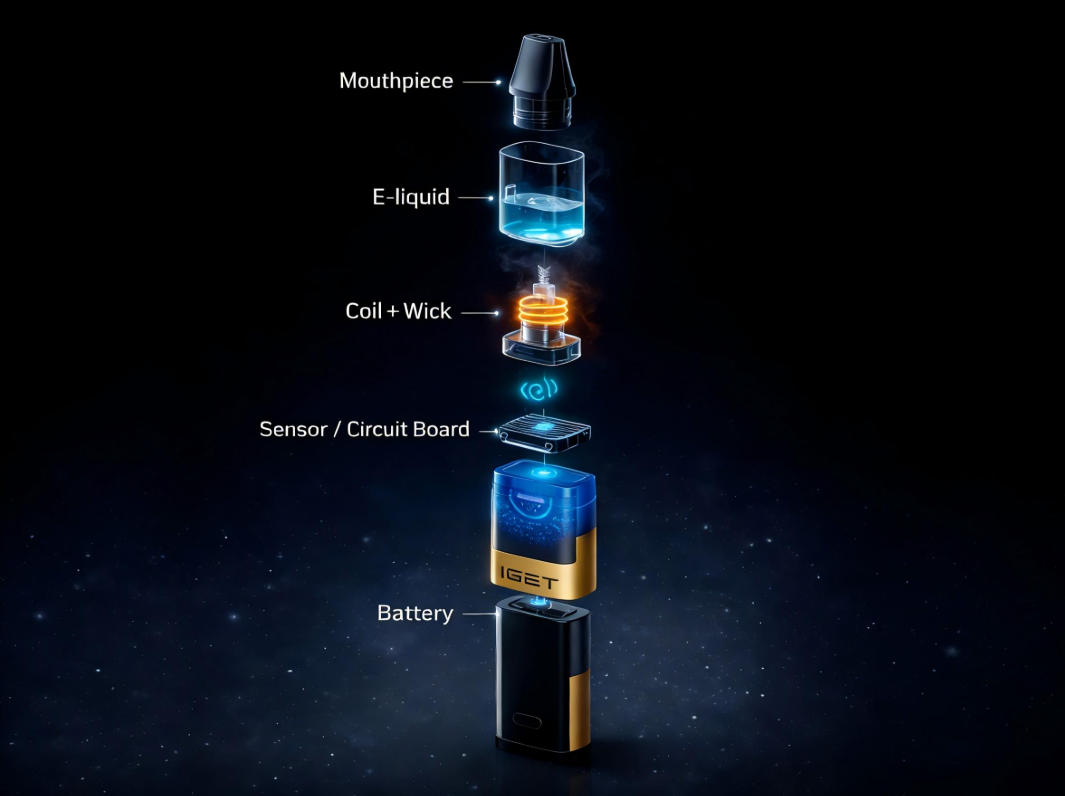
What is inside a vape? Most electronic vaping devices contain a power source, electronic controls, a heating element, a wick, an e-liquid reservoir and an airflow path. The liquid typically contains propylene glycol (PG), vegetable glycerin (VG), flavoring ingredients and, in nicotine products, nicotine. Exact designs and formulations vary.
The main parts inside a vape device
Battery and charging components
The battery supplies electrical energy to the heater. Rechargeable devices may include a charging port and protection circuitry. Battery capacity, cell sourcing and charging behavior are important procurement specifications. A device without a manufacturer-approved charging method should never be modified for recharging.
Control board and activation sensor
A small circuit board manages power delivery. Depending on the design, a pressure sensor activates the device when the user draws, while other models use a button. Some include indicators, screens or adjustable output. Buyers should request a description of protections and firmware or hardware revision controls where applicable.
Heating coil and wick
A resistive coil or mesh heater converts electrical energy into heat. A porous wick brings e-liquid into contact with the heater. Material choice, assembly tolerances and liquid supply affect consistency. Poor contact or inadequate wicking can cause dry heating and off-flavors.
Pod, cartridge or tank
The reservoir stores e-liquid. It may be factory-filled, refillable or replaceable. Important design details include capacity, seal construction, connection tolerances, filling access and compatibility with the battery unit.
Mouthpiece, airflow and housing
Air enters through openings, passes the heated area and carries the resulting aerosol through the mouthpiece. The outer casing protects components and influences ergonomics. Aerosol is not simply water vapor, and its composition depends on the liquid, materials and operating conditions.
What ingredients are inside vape liquid?
Propylene glycol (PG) is commonly used as a carrier for flavor ingredients. Vegetable glycerin (VG) contributes viscosity and aerosol formation. Flavoring ingredients vary by formulation; an ingredient suitable for eating is not automatically established as safe for inhalation. Nicotine may be present in different forms and concentrations or absent in nicotine-free products. Additional ingredients should be documented rather than assumed.
For importers, a formulation sheet alone is insufficient: request relevant ingredient identity, purity and emissions evidence for the specific product and destination market.
How does a vape work?
- The user activates the device through a draw sensor or button.
- The control circuit delivers energy from the battery to the heating element.
- The wick supplies liquid to the heater.
- Heated liquid forms an aerosol that travels through the airflow path.
The process depends on electrical settings, coil geometry, wick saturation and liquid composition. Device and liquid combinations should be assessed as a system rather than as unrelated components.
Disposable versus refillable pod systems
A disposable device generally combines its battery, heater and prefilled liquid system into a unit intended for disposal after use. A refillable pod system generally retains the battery unit while allowing the reservoir to be refilled or replaced. Reusable designs require attention to pod fit, refill seals, replacement availability and user maintenance. Neither design is automatically permitted in every European market.
What European importers should check
Before ordering, confirm a bill of materials or equivalent component description, battery and charging specifications, liquid composition, batch traceability, leakage controls, labeling and the test evidence associated with the exact product version. Compare supplied samples against the approved production specification.
For nicotine-containing consumer e-cigarettes within the scope of Article 20 of Directive 2014/40/EU, the EU framework includes a maximum nicotine concentration of 20 mg/ml, relevant 2 ml cartridge/tank limits and 10 ml dedicated refill-container limits. Manufacturers and importers generally submit product notifications to the competent authorities of intended Member State markets six months before placement, with new notifications for substantial changes. National restrictions and other applicable requirements must also be checked.
Questions to ask a manufacturer
- Which battery, heater, wick and pod materials are used in this model?
- Which tests address leakage, electrical operation and consistency?
- How are component and liquid lots traced?
- Which formulation and emissions records match this exact SKU?
- What changes require updated technical documentation or notifications?
- What are the destination-specific packaging and instruction requirements?
Frequently asked questions
Is a vape just a battery and flavored water?
No. It contains an electrical heating system and a formulated liquid, and the resulting aerosol is not simply water vapor.
Does every vape contain nicotine?
No. Some products are marketed as nicotine-free, but buyers should verify the actual formulation and applicable local rules.
Why does coil quality matter?
Coil and wick construction influence heating behavior, consistency and the likelihood of dry heating or leaks.
What documentation should an importer request?
Ask for product specifications, component and formulation records, relevant test evidence, traceability procedures and destination-market regulatory documentation.
Conclusion
Understanding the battery, electronics, heater, wick, reservoir and e-liquid helps buyers evaluate real product quality rather than relying on appearance or advertising claims. For procurement guidance, see our pod system vape sourcing guide.
Regulatory reference: Directive 2014/40/EU, Article 20 (EUR-Lex). This is general information, not legal advice; check current national requirements for each product.