 English
 French
 German
 Italian
 Polish
 Russian
 Spanish
A zero nicotine disposable vape is a single-use electronic vaping device marketed as containing no nicotine. Its nicotine status and disposable construction are two separate regulatory questions. A 0 mg label does not establish safety or legal market access.
What does zero nicotine mean?
These devices heat a liquid that may contain propylene glycol, glycerol and flavouring substances. The resulting aerosol is not simply water vapour. WHO reports that nicotine has been detected in some products marketed as nicotine-free. Absence of nicotine does not eliminate exposure to other potentially harmful substances.
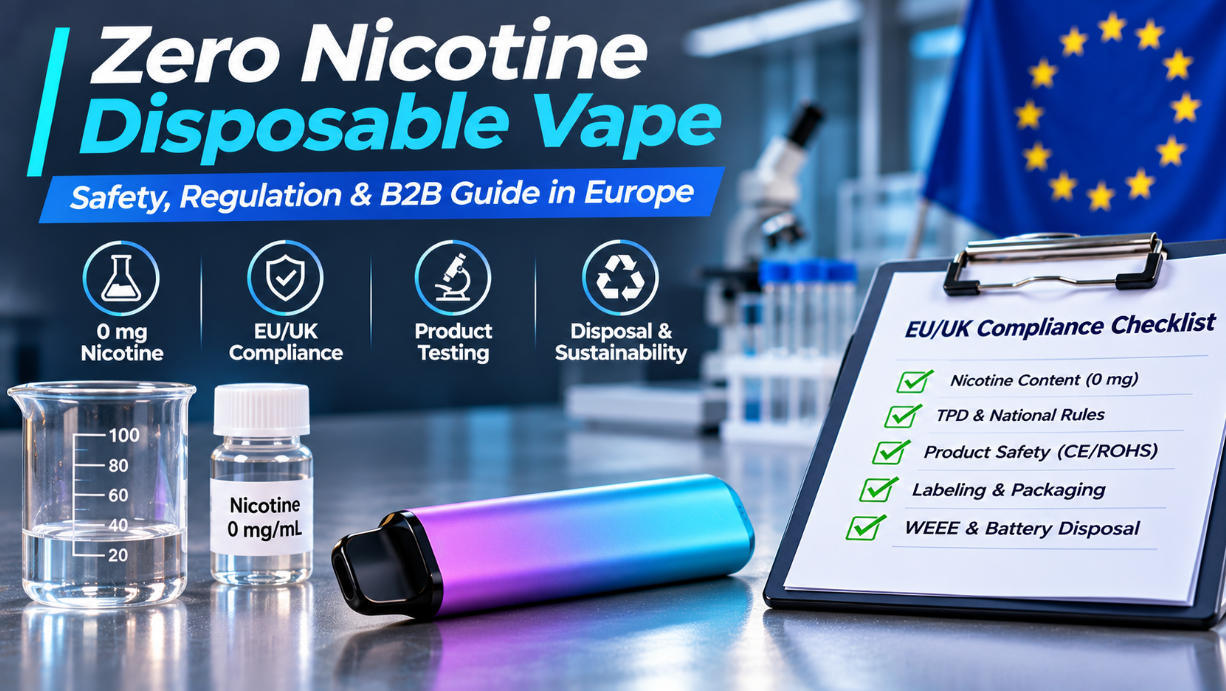
European restrictions on single-use devices
In the UK, commercial sale and supply of single-use vapes has been prohibited since 1 June 2025, regardless of nicotine content. Belgium introduced its disposable e-cigarette ban on 1 January 2025, including nicotine-free products. France also prohibits defined single-use vaping devices; the exact national statutory scope should be checked. European national rules are not interchangeable.
A charging port does not by itself establish that a device is reusable. See our overview of European disposable-device restrictions.
Does the Tobacco Products Directive apply?
Article 20 of Directive 2014/40/EU regulates electronic cigarettes and refill containers within its defined scope. Product classification depends on the device and its intended use, not merely a nicotine-free label. National legislation may extend requirements to nicotine-free products. General product safety, chemical classification, battery and waste obligations may also apply.
Understanding nicotine test results
Independent laboratory analysis can help establish whether a liquid contains detectable nicotine. A report should identify the sample, analytical method, reporting limit and units. A result below a detection or quantification limit is not proof of absolute chemical absence. Results for one sample cannot automatically establish the composition of every production batch. Read the related nicotine testing overview and zero nicotine vape regulatory guide.
Environmental and product safety considerations
Single-use devices combine electronics, batteries and residual liquid. They should not be discarded with ordinary household waste where separate collection is required. Damaged or overheating devices can present battery hazards. Businesses should follow applicable recall, waste handling and product safety obligations and avoid claims that nicotine-free products are harmless.
Frequently asked questions
Are zero nicotine disposable vapes legal in the UK?
No. The commercial single-use vape ban includes devices without nicotine.
Does 0 mg mean absolute absence of nicotine?
Not necessarily. The label is a claim, and analytical results have measurable reporting limits.
Are nicotine-free disposable vapes harmless?
No. Aerosol can contain potentially harmful substances even in the absence of nicotine.
Does charging make a disposable vape reusable?
No. UK requirements also address refilling and replaceable coils where applicable.
Are rules identical across Europe?
No. National definitions, restrictions and implementation dates differ.
How should prohibited disposable stock be handled?
Follow applicable lawful waste collection and recycling requirements. Do not sell prohibited stock.
References
- UK government: single-use vapes ban
- Belgian EU-CEG guidance
- Directive 2014/40/EU
- WHO European Region: regulation of e-cigarettes
Reviewed November 2026. General regulatory and safety information, not legal or medical advice.